Technology developments in recent years have been nothing short of exciting, live sports streaming has become a popular pick and has revolutionized how fans watch their favorite events. The days of rushing home to watch a match or being glued to a television screen are becoming less common. Thanks to tech, sports fans can now watch games on any device, from anywhere. They can also enjoy new levels of personalization and interactivity. Platforms like https://22bet.co.zm/prematch, for example, let fans easily follow their favorite teams and sports.
AI, streaming, and fan engagement tactics are driving this change. Future advancements are expected. They will create an immersive experience that goes beyond just watching the game. Here are some predictions for the future of live sports broadcasting and how technology is transforming it.
Smooth Accessibility Between Devices
The ability to watch games on different devices is one of the biggest developments brought about by live sports streaming. Fans no longer have to rely on cable TV subscriptions alone. Fans can now watch live sports anywhere using streaming platforms. They can use laptops, smartphones, tablets, or smart TVs.
This change has improved accessibility. It has also let broadcasters and sports leagues reach a global audience. Geographical limits used to block fans from live games. Today, they can watch their favorite teams and players in real time. OTT (over-the-top) services like ESPN+, DAZN, and Amazon Prime Video have made things even easier. Their customized subscription plans and on-demand replays help.
Improved Viewing Experiences Using Data Integration and AI
A major factor in improving the live sports streaming experience is artificial intelligence (AI). AI-powered analytics let fans view in-depth game data. This includes real-time player stats, heat maps, and performance metrics. This extra knowledge enhances the viewing experience and helps fans understand the game better.
Another area in which AI excels is personalization. Now, streaming services use AI algorithms. They suggest games, highlights, and other content based on user preferences. For example, if a fan often watches soccer, the platform may prefer material from their favored leagues and players. This would make the experience more personalized and engaging.
Immersion through Virtual and Augmented Reality
Fans’ experiences watching live sports will be completely changed by the combination of augmented reality (AR) and virtual reality (VR). AR overlays can enhance live viewing. They can show player IDs, stats, and interactive replays on the screen. However, fans may be able to practically “attend” games from the comfort of their homes thanks to virtual reality.
Imagine using a VR headset to watch a soccer match from a player’s view or to sit courtside at an NBA game. This tech is still new, but it could revolutionize sports streaming. It could create an immersive experience that brings viewers closer to the action than ever before.
Interactivity and Social Engagement In addition, technology has given fans additional methods to communicate with each other during live broadcasts and during games. Viewers can interact with the game in real time thanks to interactive features including live polls, quizzes, and chat options. Fans can now share their thoughts with a global audience on Facebook, YouTube, and Twitter. They are now essential to the live sports experience.
Social features like watch parties are becoming common in live streaming. They let fans watch games together and chat during the broadcast. Even when fans are geographically apart, this fosters a feeling of camaraderie and shared enthusiasm.
Better Quality with Edge Computing and 5G
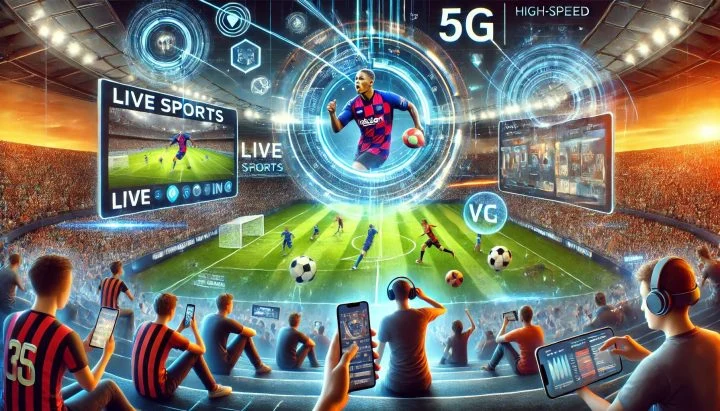
The introduction of 5G networks, which offer quicker speeds and less latency, has revolutionized live sports streaming. Even in congested areas, this means more reliable, smoother, and higher-quality video. Edge computing improves this. It processes data closer to the user. It minimizes lag and ensures real-time content delivery.
Fans expect that ultra-HD and 8K streaming will become common. These developments will provide incredibly clear images that show every aspect of the game.
The Future of Sports Streaming and Sustainability
As the demand for live sports streaming increases, the industry must also address its environmental impact. The large energy use of data centers and streaming services raises sustainability concerns. Companies are now seeking ways to cut their carbon footprint. They are looking into using renewable energy and optimizing data delivery.
In the future, developments in AI, machine learning, and blockchain technology may contribute to the development of more environmentally friendly and efficient sports streaming, which would allow fans to enjoy high-quality content while supporting sustainable practices.
In short, live sports streaming has a bright future. Tech advances are changing how fans watch games. The possibilities are boundless, ranging from VR-enabled immersion to AI-driven customization.













Leave a Reply